Article
AR-HIS-0002 / Public
The Marsh Silence: Geological Research on Pandora's Rock
Newly traced records suggest the Marsh family helped obscure a 1930s research programme on Pandora's Rock that was never simply geological.
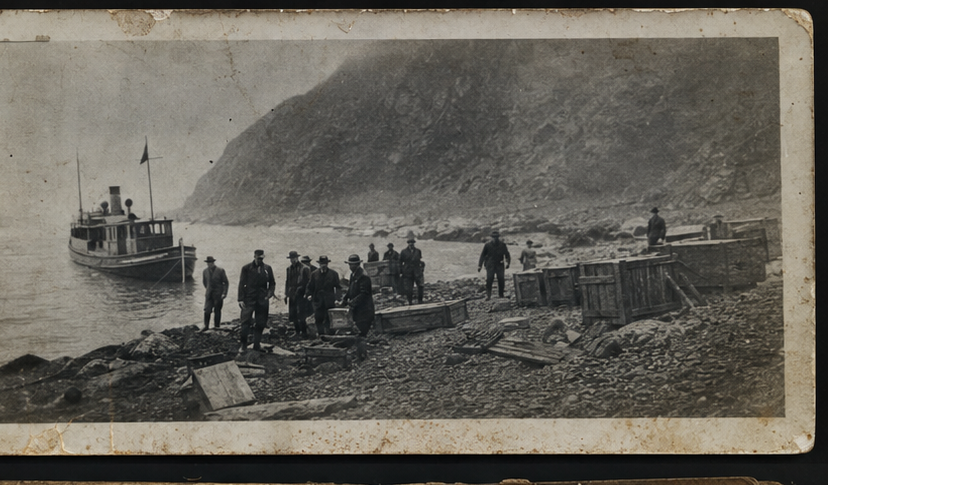
The Marsh family name appears only faintly in the public record of the Outer Islands. That absence is not accidental. For decades, surviving references to Marsh ownership, access rights, and private correspondence have been narrowed, challenged, or removed through the careful work of family representatives acting on behalf of the remaining Marsh line in the United States.
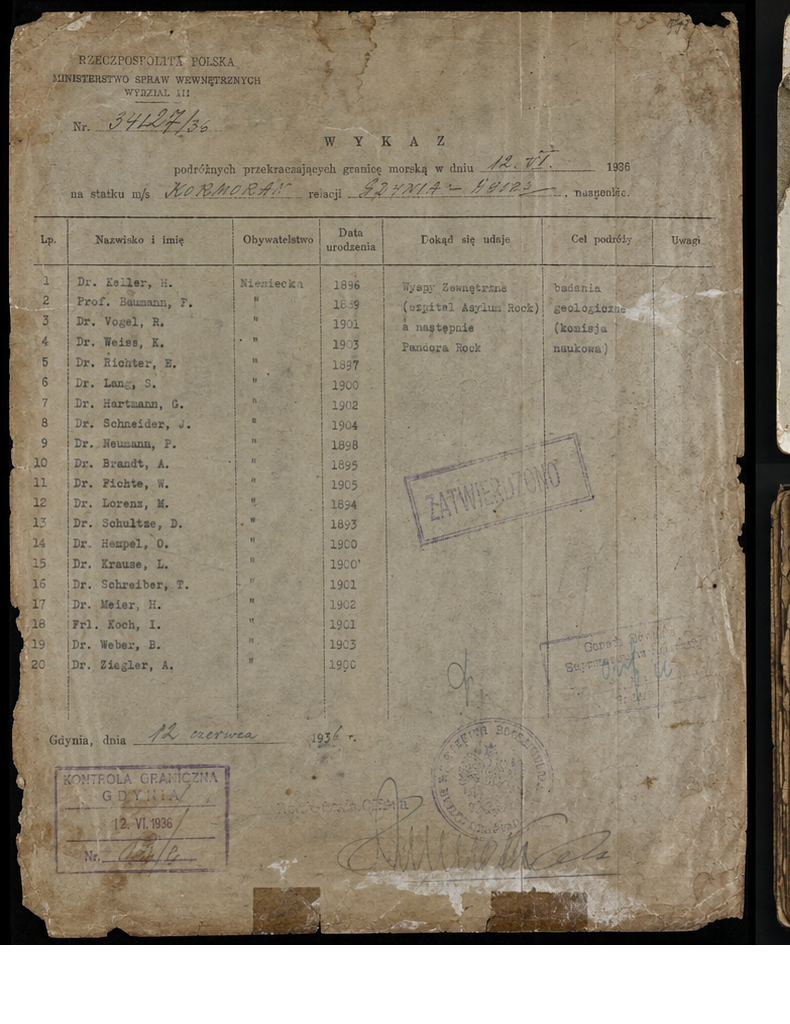
Even so, the record has not disappeared completely. A thin trail remains, and it has become more visible since the release of several Polish government files relating to movements through Asylum Rock in 1934 and 1936. Those files indicate that a substantial foreign research party travelled through Asylum Rock before continuing to Pandora's Rock, the neighbouring island long treated in estate papers as a secondary holding of limited value.
The official description of the visit was geological research. That label now appears increasingly inadequate. The party did include a small number of geological specialists, but their work was regarded by several contemporaries as irregular, speculative, and unusually concerned with symbolic interpretation rather than practical survey. The larger group was stranger still: archaeologists, historians, linguists, and theoretical physicists whose notes do not read like the supporting staff of a mineral expedition.
Several of the German scientists named in the Polish files held senior academic or institutional positions and had known sympathies with the national socialist movement then rising in Germany. This does not, by itself, explain their presence on Pandora's Rock. It does, however, make the stated purpose of the visit harder to accept at face value.
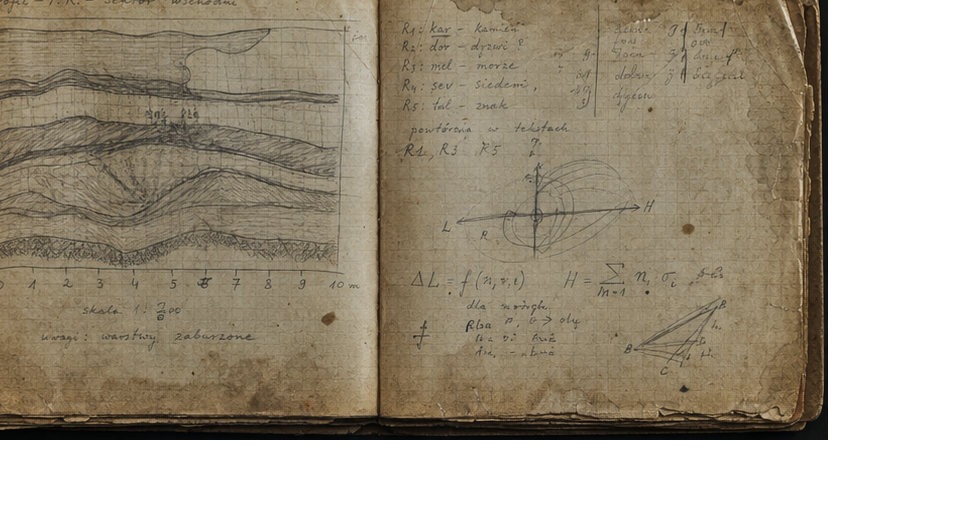
Fragments recovered so far refer to inscriptional comparison, acoustic chambers, pre-Christian maritime rites, and calculations described in one translation as 'L and H spatial tolerances.' The mathematics were dismissed by at least one reviewer as elegant but useless, unless one accepted premises that no respectable mathematician of the period would endorse. Other marginal notes are more difficult to classify and appear to treat folklore, language, and physical space as related systems.
The most troubling detail is not any single document, but the consistency of the omissions. The Marsh papers avoid Pandora's Rock during precisely the years when travel records, supply orders, and foreign memoranda suggest unusual activity there. The family lawyers may have succeeded in protecting reputational interests, but they could not remove every ferry docket, every customs note, every mislabeled crate, or every copy made by a clerk who did not know what would later matter.
Further information is expected as the Asylum Rock records rooms are retrieved and stabilised. That process will be slow. The hospital complex is vast, structurally dangerous, and still poorly mapped in several lower service areas. For now, the Marsh trail remains partial, but it is no longer invisible.