Article
AR-ENG-0005 / Public
Beneath the Waterline: First Excavation at the Hydrotherapy Reserve
Slow excavation beneath the hospital has exposed the first accessible section of the lower water reserve, where tank volume, obsolete machinery and a confirmed desalination vessel exceed earlier estimates.
The first controlled excavation phase at the Hydrotherapy Reserve has begun beneath the eastern service levels of Asylum Rock. Progress has been slow. Loose concrete, fallen pipework, standing water and several unstable retaining surfaces have limited the team to a narrow route along the upper edge of the reserve.
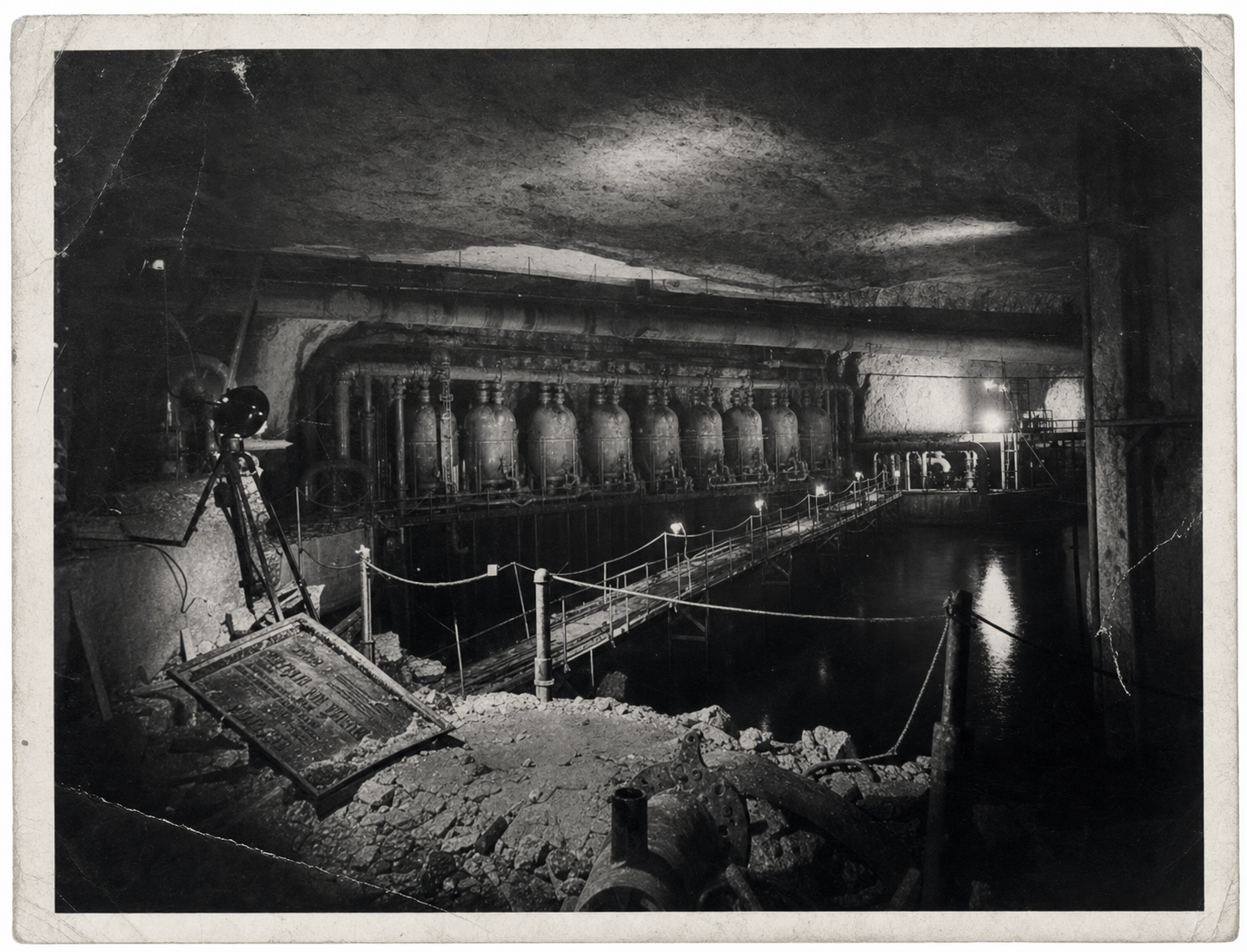
Even that limited access has altered the scale of the site. Earlier engineering references, the Shepherd photographic packet and the surviving Malin planning material all indicated a large water-handling installation. The cleared section now confirms that the system was larger still. A raised steel walkway crosses black water beneath a low rock-cut ceiling, while pipe runs and vessel housings continue beyond the current lamp range.
Institute engineers have described the visible volume as difficult to reconcile with the ordinary requirements of a hospital hydrotherapy wing. The reserve is not a single tank, nor a conventional plant room. It appears to be a connected subterranean basin with separate access, pumping and treatment levels built into the rock beneath the hospital.
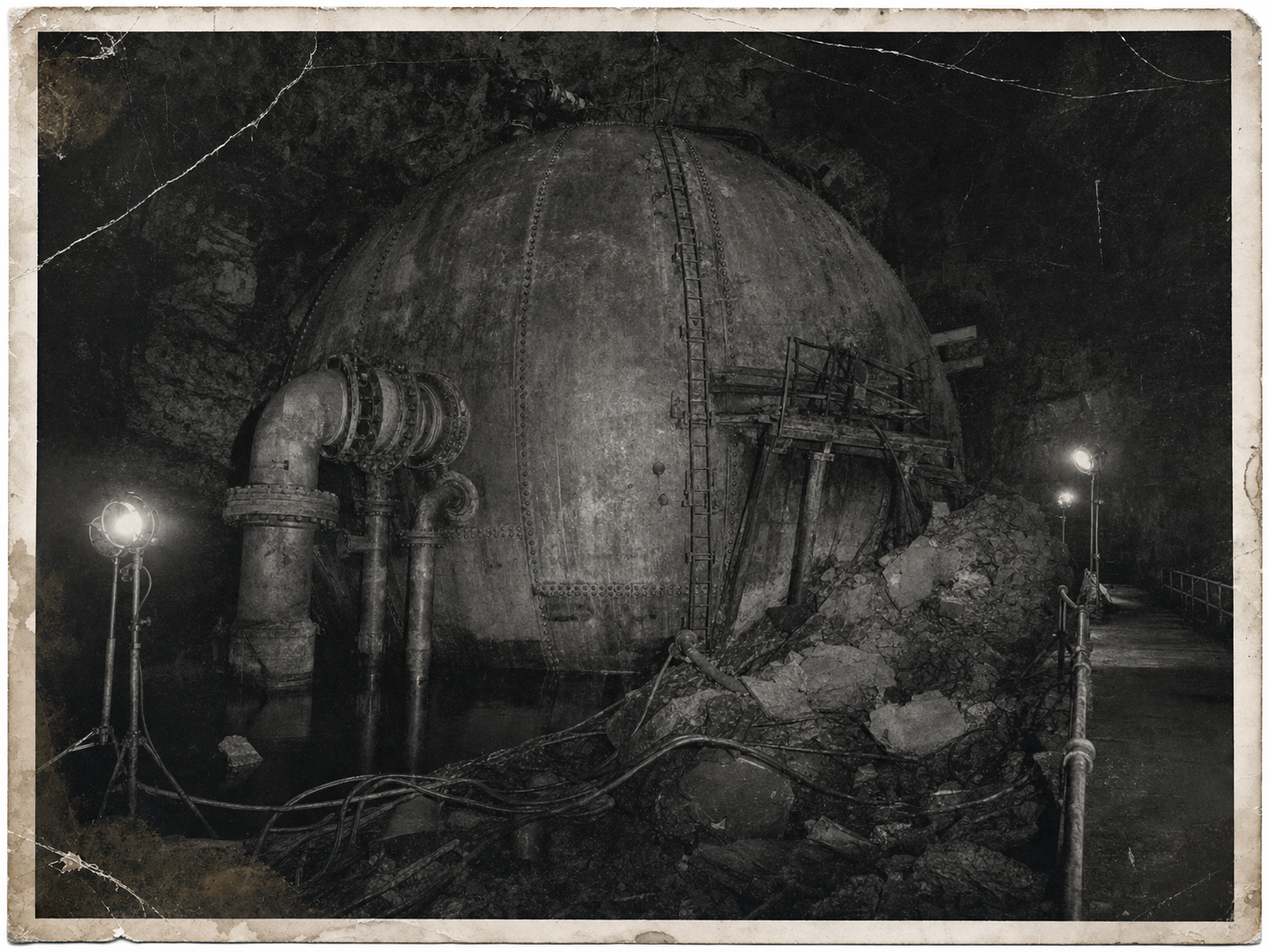
The most significant early confirmation is an installed Malin desalination vessel. One sphere has been exposed beside the cleared route, partly buried by collapse material and still connected to large intake and return lines. Its riveted casing, service ladder and pipe arrangement closely resemble the earlier external sphere studies held in the engineering archive. The unit is far larger than the prototype material implied.
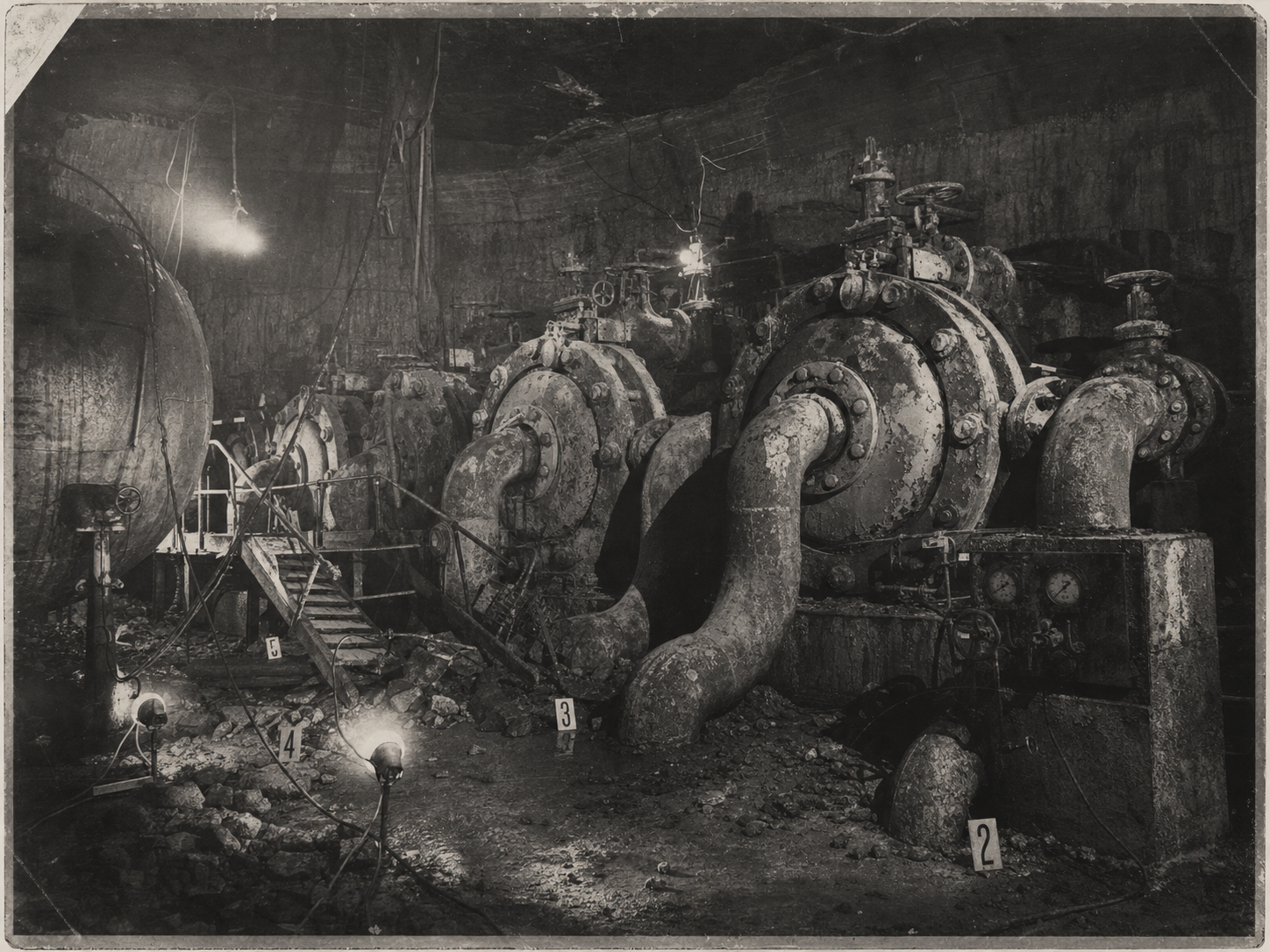
A second route has reached part of the pump gallery below the walkway. The machinery is heavily corroded, with cracked enamel casings, seized valves, damaged gauges and large intake pipes running into darkness. No attempt has been made to operate any part of the system. The excavation team has instead placed temporary lamps and markers around the exposed equipment while the pressure routes are mapped.
The care is necessary. Several passages remain blocked, and the team has not yet established whether the water level is isolated or connected to a deeper intake. The condition of the old machinery makes sudden drainage, movement or pressure change an unacceptable risk. Work will therefore continue in short sections, with the reserve treated as an active industrial structure rather than a cleared ruin.
The new photographs do not answer how many vessels remain installed, or how much of the lower system can still be reached. They do, however, make one point difficult to avoid: Malin's hydrotherapy works were not an unusually ambitious hospital utility. They were an underground water complex built on a scale the hospital itself does not explain.
Further publication will follow conservation review, structural assessment and comparison with the surviving engineering files. For now, the first excavation has opened only a fraction of the reserve. It is already enough to show that the darkness beneath the hospital was not empty.