Article
AR-SHEP-0001 / Public
The Black Reserve: Shepherd's Water Tank Photographs
Police archive photographs attributed to Anne Shepherd document the lower water reserve, pump-control room, and impossible scale of the hydrotherapy supply system beneath Asylum Rock.
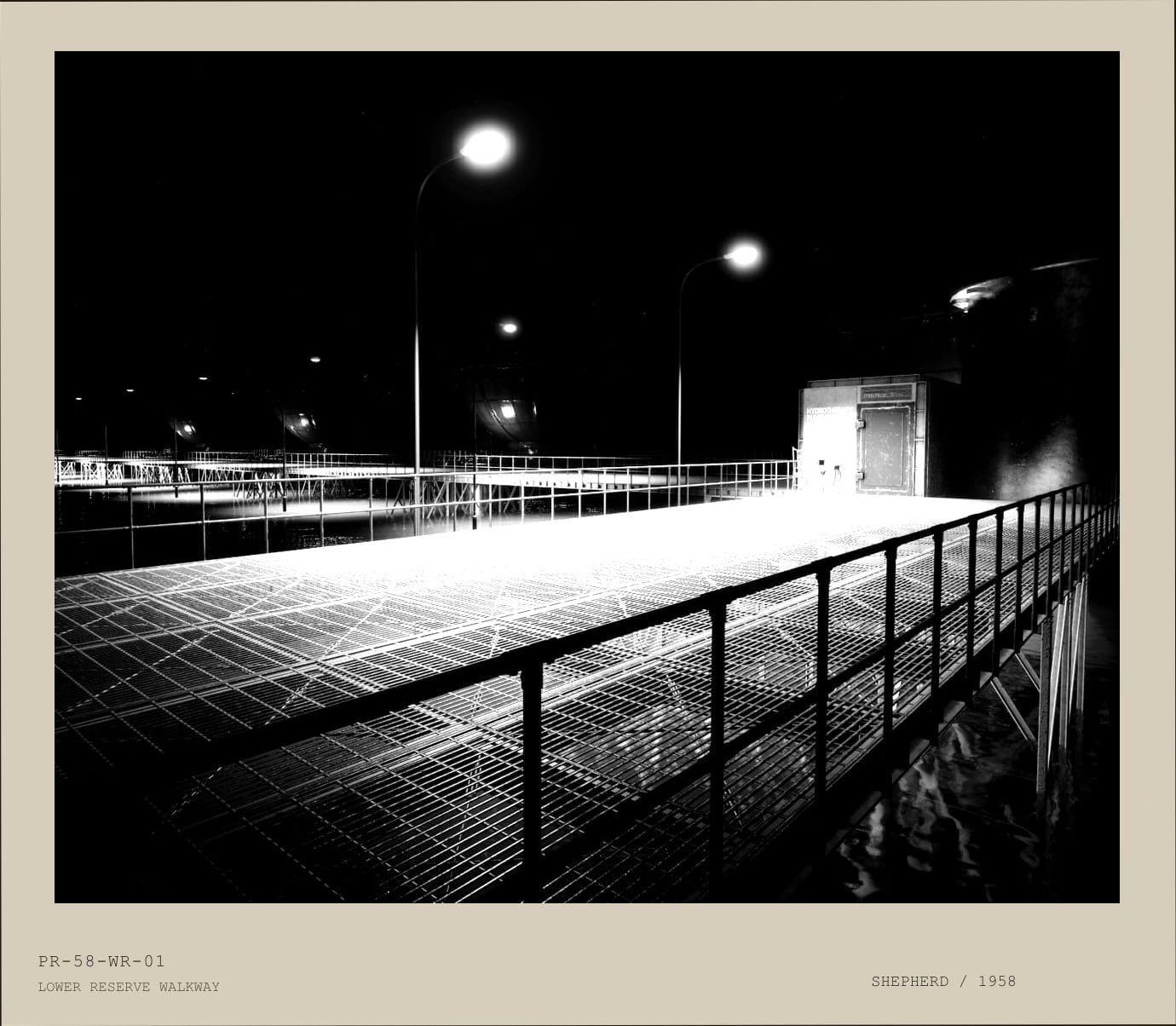
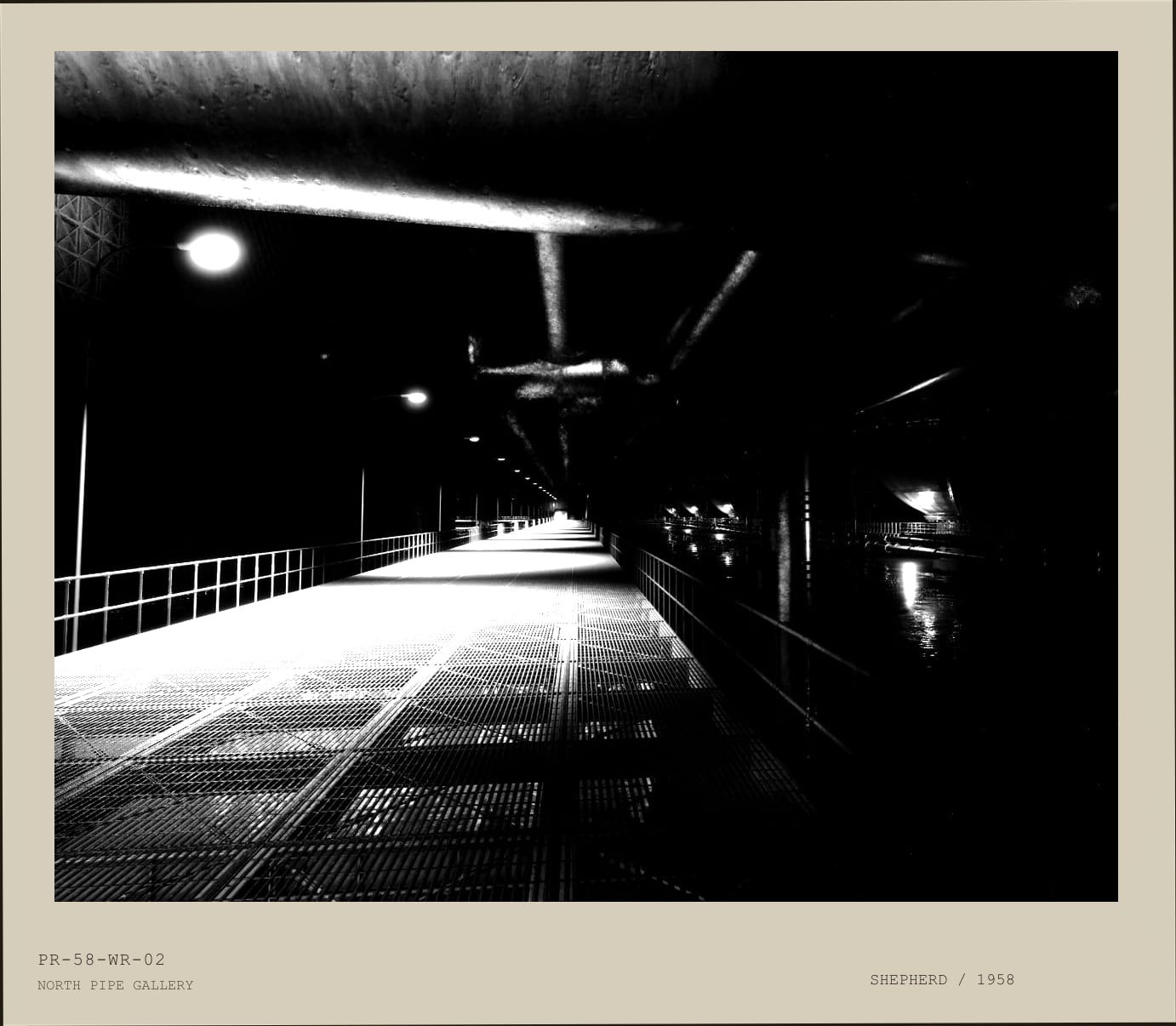
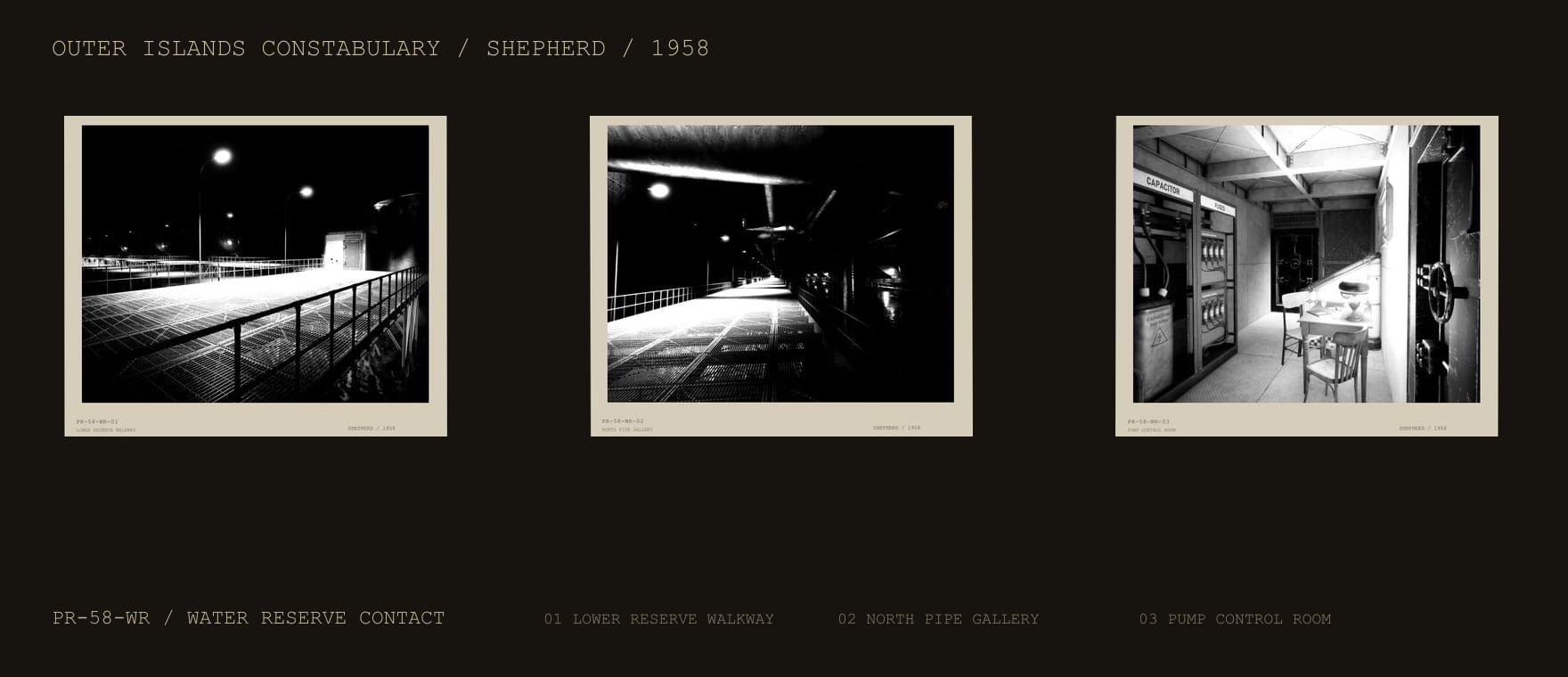
A newly stabilised police photographic packet attributed to Anne Shepherd has been matched to the lower water reserve beneath Asylum Rock. The packet appears to date from Shepherd's 1958 investigation into anomalous radio signals reported across the Outer Islands. Until now, references to the reserve have relied mainly on engineering summaries, patient accounts, and later structural surveys.
The photographs are difficult, high-contrast views taken in low light, but they are valuable because they show the installed system rather than the earlier exterior sphere studies. A raised metal walkway crosses black, still water. Beyond it, partially visible under lamps and red warning light, are the curved housings believed to be Malin's desalination spheres. The reserve was not a small service tank. It appears to have been a cavernous engineered basin, with no visible bottom in the surviving prints.
Earlier records describe a bank of ten spheres processing seawater before pumping treated water into the hospital's hydrotherapy systems. Shepherd's photographs support that description while raising larger questions about scale. The visible pipe runs, overhead conduits, and intake structures suggest a volume of water more appropriate to a municipal plant than a remote hospital wing.
The presumed Atlantic feed has not been physically confirmed, but Shepherd's diary entries repeatedly return to a west intake and to the absolute stillness of the water below the walkway. One entry describes the reserve as "still as glass, and wrong in the way deep water is wrong when it should be moving." Another records that the strongest low signal was detected beside the west tank wall.
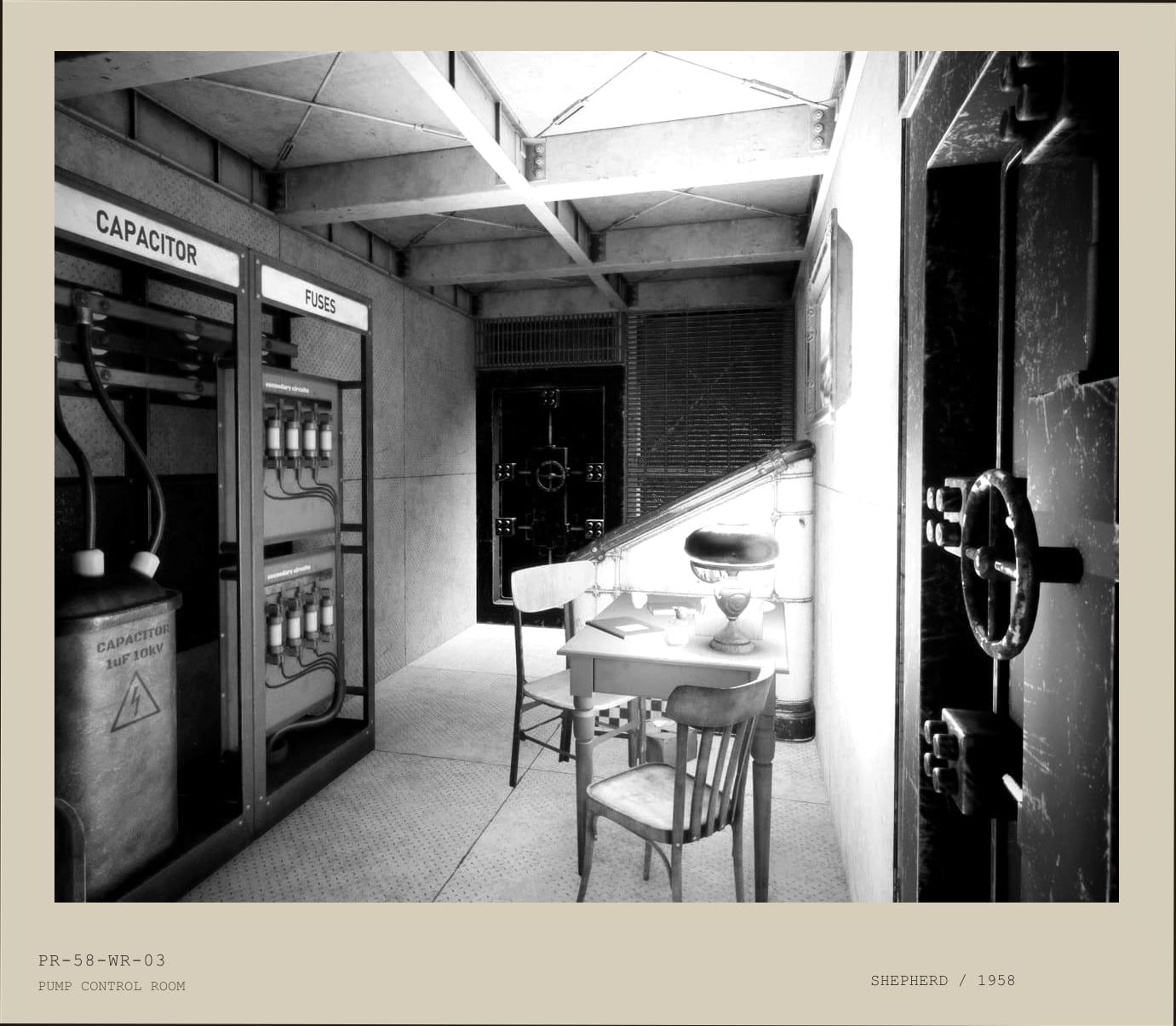
The third photograph in the packet shows a pump-control room beside a heavy door marked for hydrotherapy access. A desk, lamp, fuse assemblies, capacitor cabinet, and valve hardware are visible. Shepherd's diary, held separately from the photographic packet, indicates that she copied a valve order from the room and later described the chamber as "not a service room, but a lock." The operating sequence has not been added to the public catalogue.
That detail is important because later diary entries make frequent reference to the hospital's hydrotherapy suites, transfer rooms, immersion systems, and other water-based treatments. Shepherd appears to have been perplexed by the amount of water being stored, moved, and conditioned below the hospital. Her language is careful, but the concern is plain: the reserve did not feel like supporting infrastructure. In the diary it becomes a recurring threshold, a place she returned to in memory even after moving deeper into the hydrotherapy levels.
The Trust is treating the packet as a bridge between two record groups: the engineering archive that describes Malin's desalination system, and the Shepherd investigation material concerned with sealed routes, signal interference, and lower-level access. Further publication will depend on conservation review and comparison with the surviving hydrotherapy maps.