Article
AR-SHEP-0002 / Public / edited release
The Other Ones: Shepherd's Account of the BOB Corridor
A carefully edited release from Anne Shepherd's 1958 diaries records an encounter with active BOB Orderlies—and with another machine the ordinary units appeared to fear.
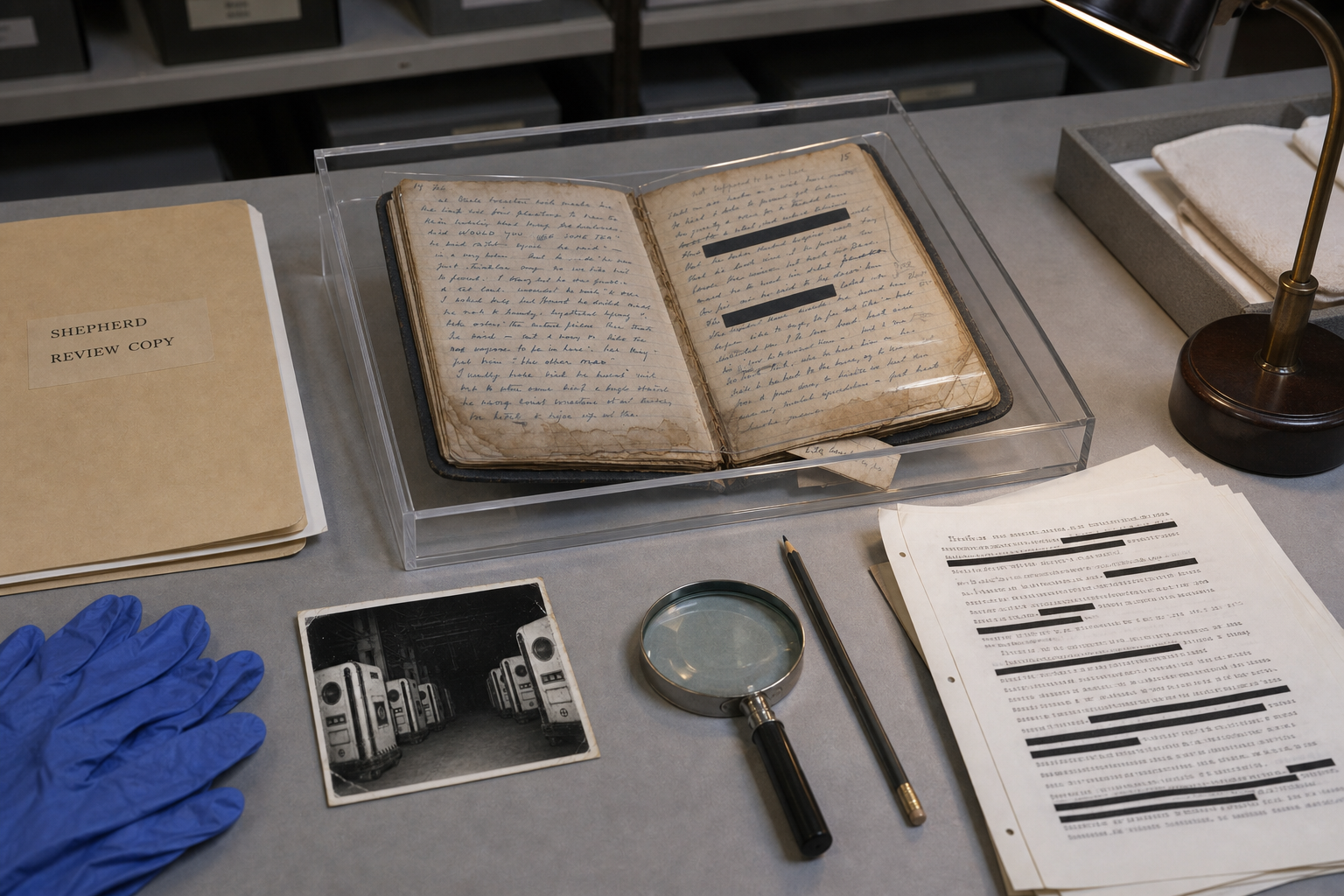
The Institute has completed a preliminary editorial review of a short sequence from the second surviving volume of Anne Shepherd's 1958 field diaries. The pages concern her movement beyond the recognisable hospital wards and into a space she believed to be an assembly plant. They are published here in edited form after comparison with the Shepherd photographic packet, Malin engineering fragments, and later statements concerning automated ward machinery.
Shepherd's account is significant because it does not describe the BOB Orderlies as dormant relics. She found them active, mobile, and still attempting to carry out patient-management instructions more than twenty years after the documented closure of Asylum Rock. Her language also distinguishes between two kinds of machine: the familiar service units, which she initially regarded as almost friendly, and an unidentified apparatus whose appearance changed the encounter immediately.
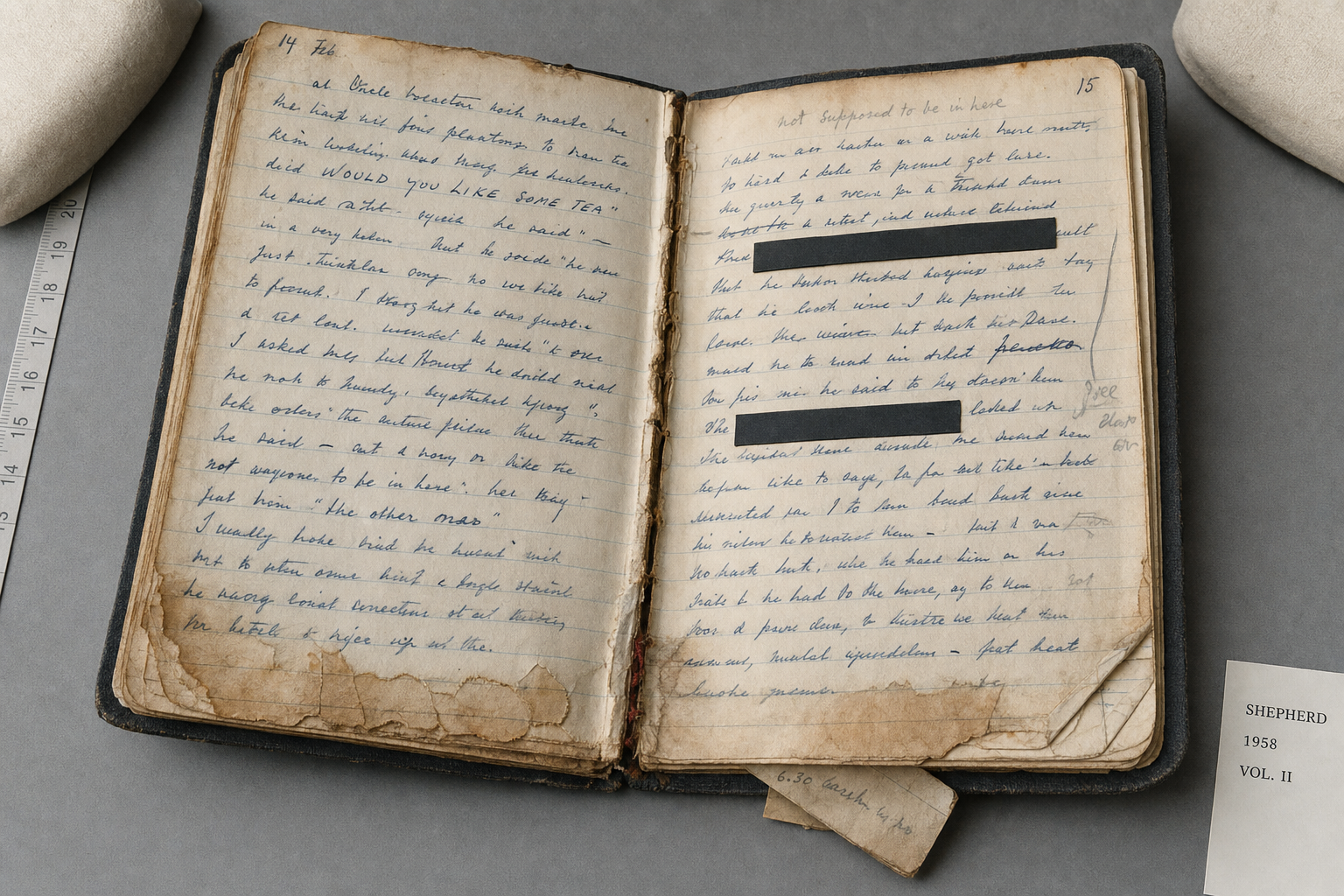
The surviving diary leaves are water-damaged and densely written. Minor punctuation has been regularised in the transcription. Words lost at folds are shown in brackets only where the reading is reasonably secure. Two route descriptions and one later location reference remain withheld while the Institute compares them with sealed structural records. No alteration has been made to Shepherd's sequence of events.
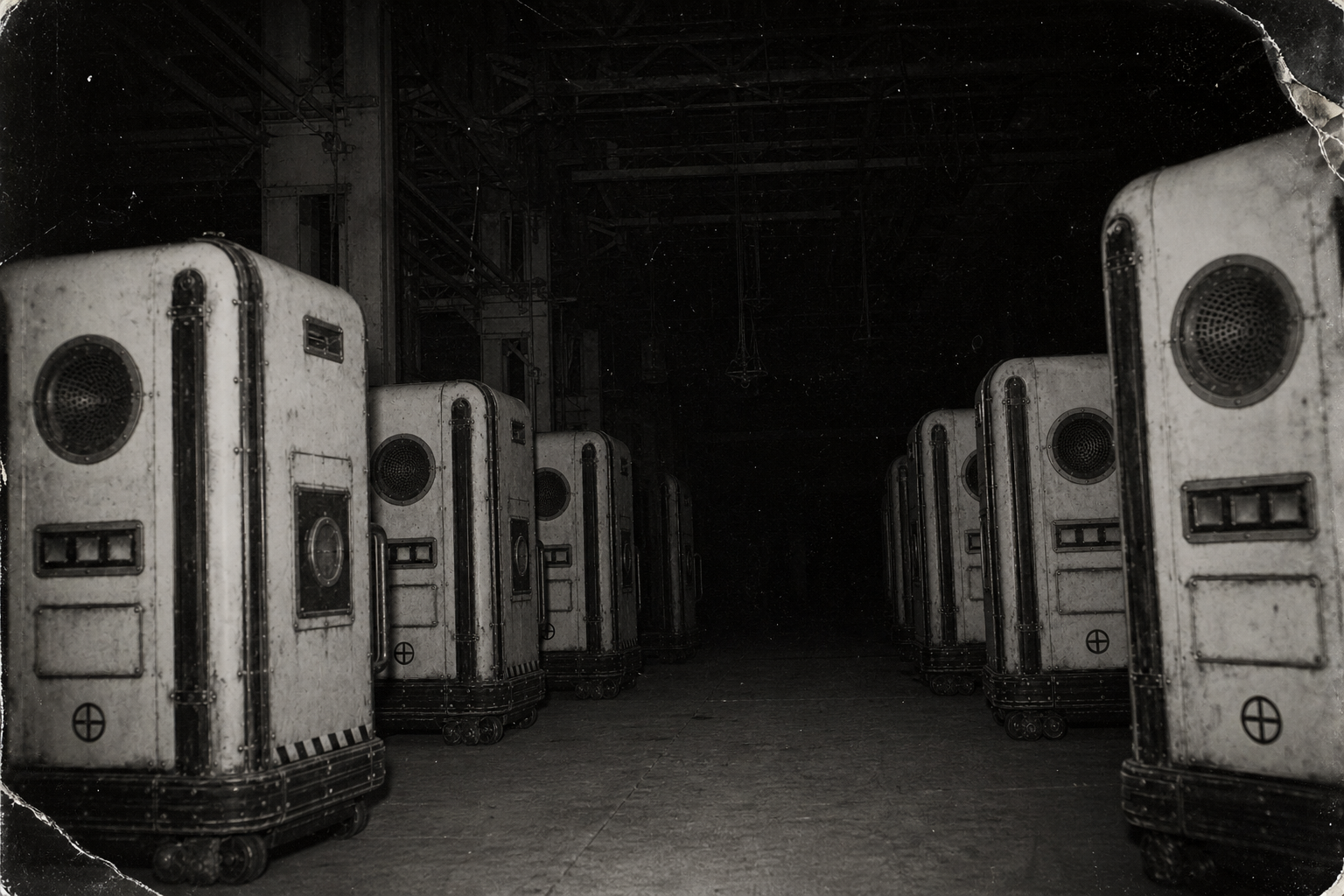
"My exploration of the strange and oppressively empty areas I found after passing through the normal-looking wards was very troubling. It was at this point, while crossing a vast space—presumably some sort of huge assembly plant—that I came across active machines developed by Malin to help manage patients."
"Naturally, these devices believed me to be a patient. After all, I had the bracelet identifying me as one. It appeared that their task was to prevent me leaving the wards, and they did not want me in that area at all."
"The units seemed friendly enough, relatively speaking, but they would routinely block my way or try to push me towards what they considered a safe area. All the while they regaled me with their strange recorded voices, booming WOULD YOU LIKE SOME TEA and YOU ARE NOT SUPPOSED TO BE IN HERE."
[PASSAGE WITHHELD: internal route description under structural review.]
"The amusement soon gave way, however, when they finally parted to reveal something I did not expect."
"There are different types of machine. The friendly ones, and the other ones."
"I saw one. Its shell was cracked with electrical discharge, and a wicked-looking prod was mounted on its front. The others made a corridor with their bodies and it charged me. I ran."
The public extract ends at that sentence. The following leaf contains hurried writing, transfer marks, and a location reference that has not yet been cleared for release. It does establish that Shepherd survived the immediate encounter. The Institute has found no indication that the final line was added retrospectively or by another hand.
The bracelet is central to the account. Shepherd had earlier obtained patient identification in order to move through controlled parts of the hospital. Whether the BOBs read a coded element, a visible marking, or merely followed an institutional rule connected with the bracelet cannot yet be established. What matters is that the machines did not initially treat her as an intruder to be attacked. They treated her as a patient in the wrong place.
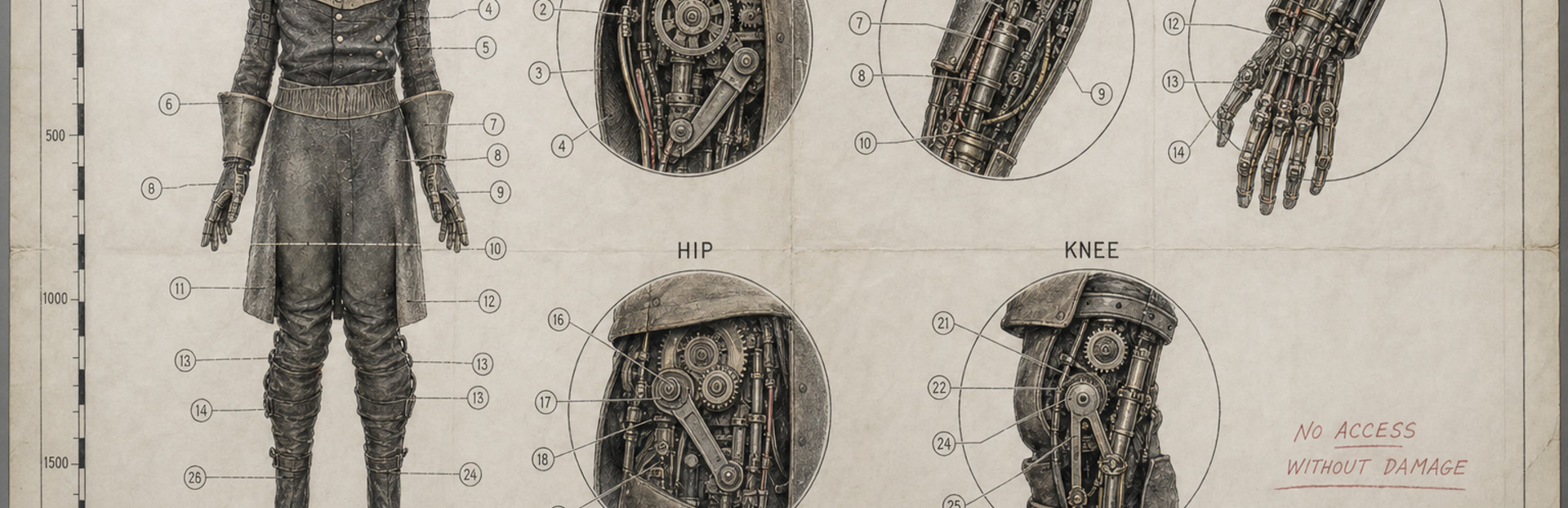
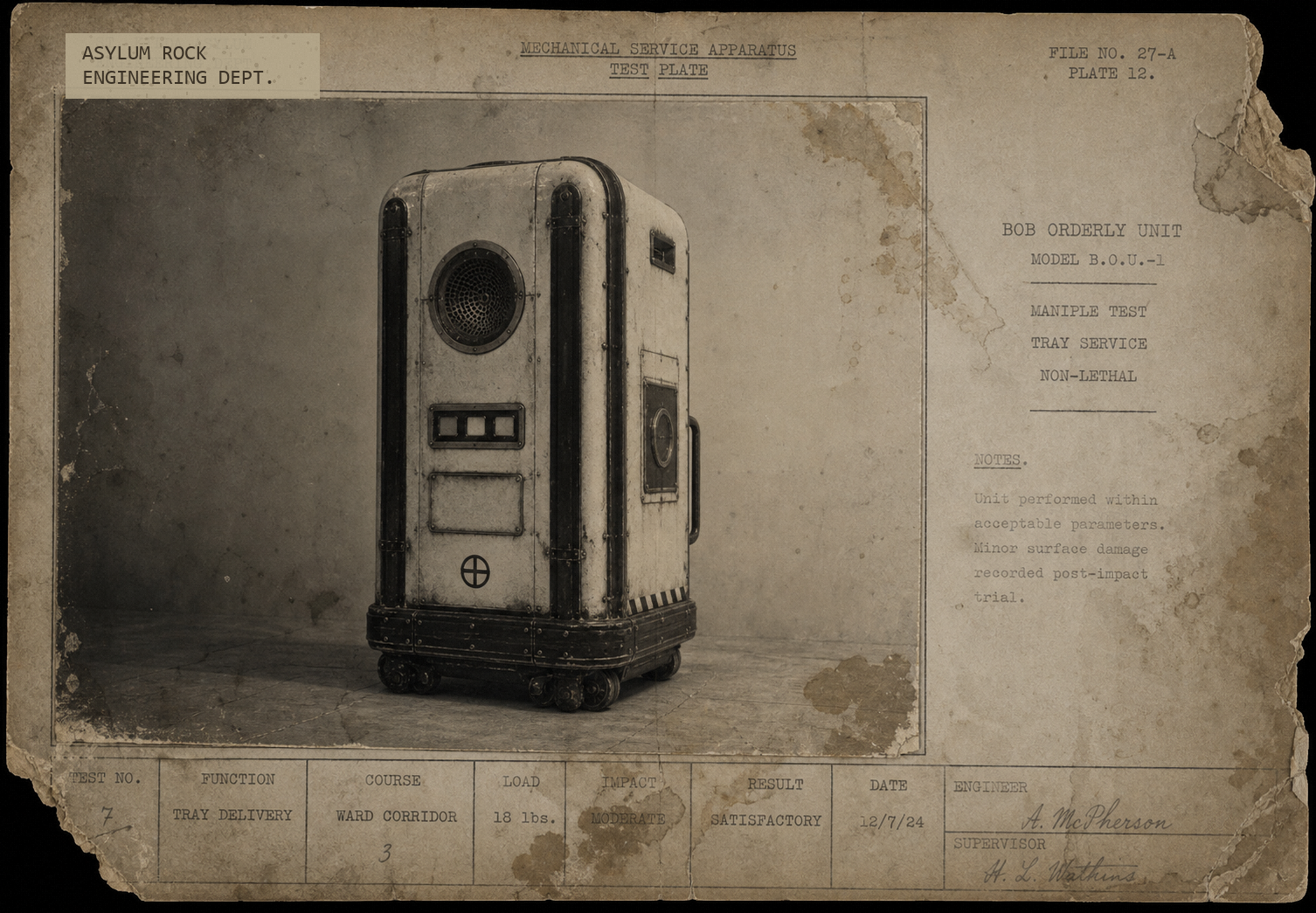
That distinction is consistent with surviving descriptions of ordinary BOB Orderlies. The ward-service units were large wheeled machines equipped for distribution, warning, route control, and limited physical intervention. Patient statements repeatedly mention recorded offers of tea or food alongside instructions to return to a ward. In isolation the phrases can sound absurd. In an empty hospital, delivered at high volume by several machines that will not let a person pass, their purpose becomes clearer.
The corridor movement is more difficult to dismiss. Malin engineering fragments suggest that groups of six BOBs could share simple priorities, adjust their spacing, and cooperate in restraint or patient recovery. Shepherd's photograph does not show the unidentified machine described in the diary: the centre of the frame is unexposed, and no further usable negative from the sequence has been identified. It does, however, show ordinary units standing in two lines with a clear passage between them.
The Institute is not identifying the machine at the end of that passage as a confirmed Restrainer, Pacifier, or other named Malin variant. Later engineering records contain suggestive references to electrically assisted patient recovery, but none presently provides a sufficiently secure visual match. Shepherd's terms—cracked shell, electrical discharge, and a forward-mounted prod—remain the only cleared description connected with this encounter.
There is also an unresolved question of intent. The ordinary BOBs may have been creating access for a specialised unit better equipped to return a patient to the wards. They may have been withdrawing from a damaged machine they no longer recognised. The corridor could have been coordinated procedure, avoidance, or both. Shepherd did not remain to determine which explanation was correct.
The edited pages therefore provide a rare boundary between the almost comic and the plainly dangerous parts of Malin's automated hospital. A recorded offer of tea, repeated for decades after the staff had gone, is peculiar but understandable as obsolete care programming. The same machines silently arranging themselves so that something else may advance is a different kind of evidence.
Review of Shepherd's remaining diary volumes is continuing. Further extracts will be released only where route information, conservation condition, and related engineering records allow the Institute to distinguish Shepherd's original account from later annotation. The withheld passages in this release will remain closed until that comparison is complete.